November 7, 2025
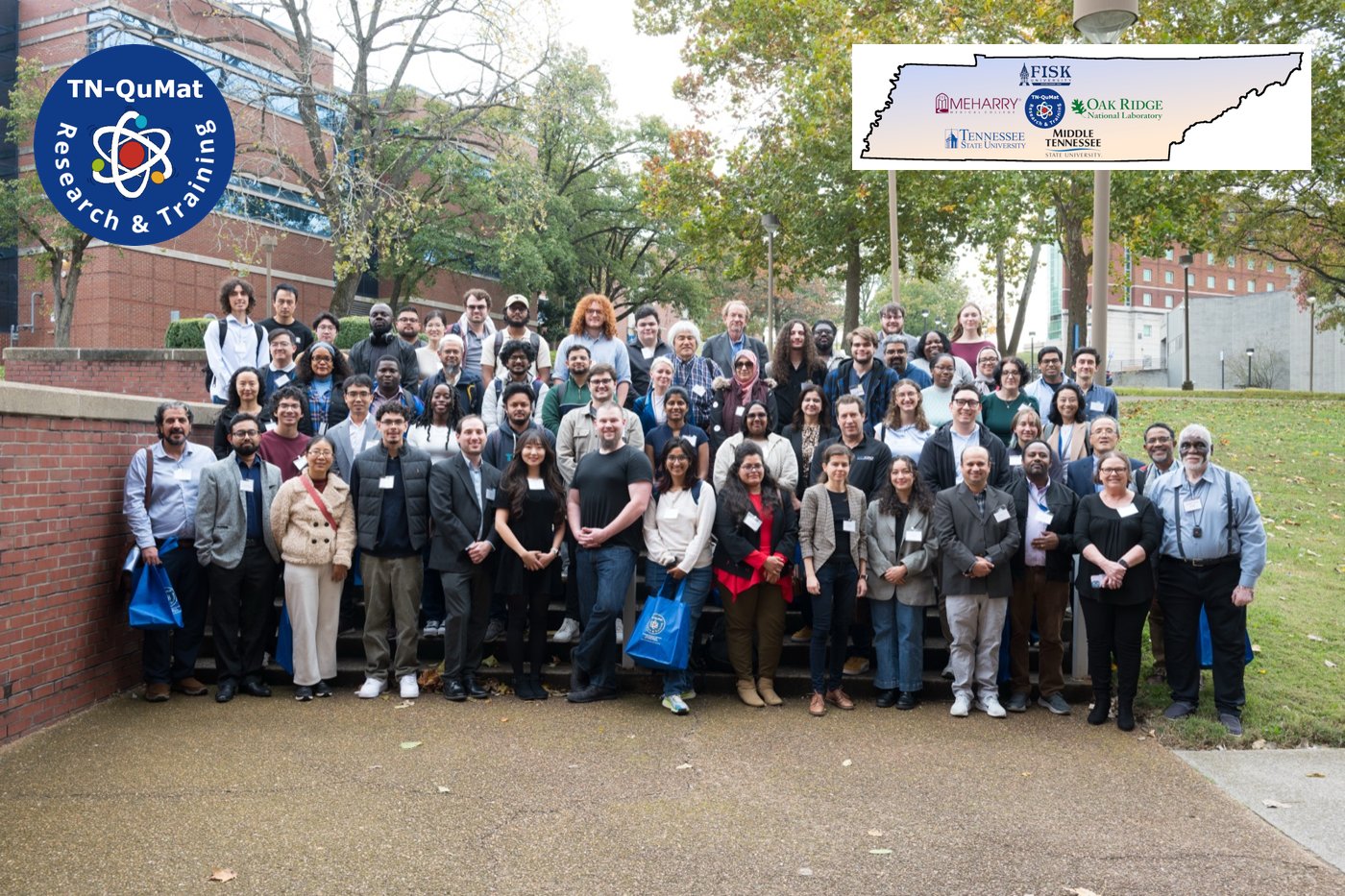
On November 7, 2025, the Quantum Research, Interdisciplinary Science & Education (QRISE) Center at Middle Tennessee State University (MTSU) led TN-QuMat Workshop 2025 at Tennessee State University (TSU) in Nashville. To our knowledge, it was the first quantum materials-focused workshop held in Nashville for academic partners, bringing university researchers and students together with national laboratory and industry scientists. Supported by the U.S. Department of Energy’s RENEW program, the event was organized through TN-QuMat, a partnership among MTSU, TSU, Fisk University, Meharry Medical College, and Oak Ridge National Laboratory (ORNL).

The goal of the TN-QuMat program is to develop a sustainable quantum-ready workforce in Tennessee by advancing quantum materials research, providing hands-on research training and mentorship from the undergraduate through the faculty level, and strengthening partnerships among the universities and ORNL.
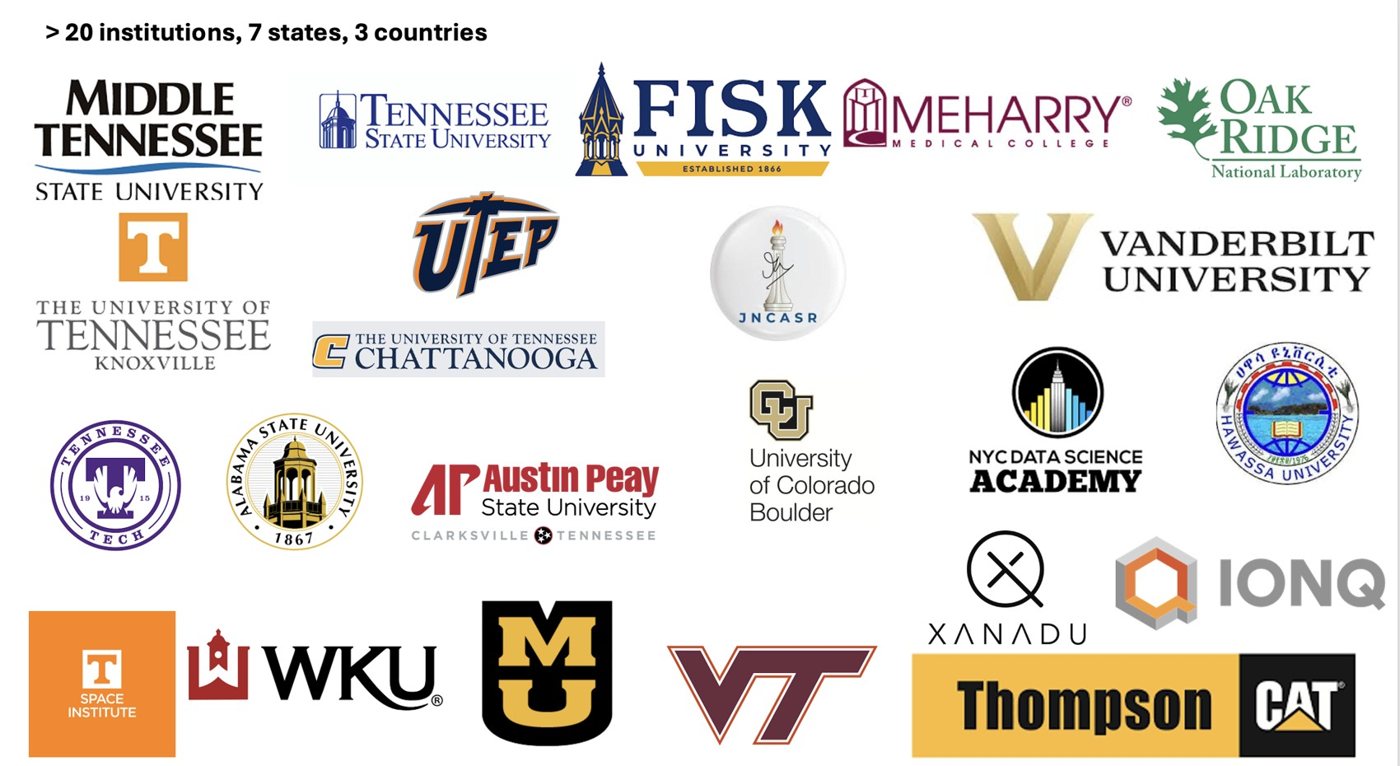
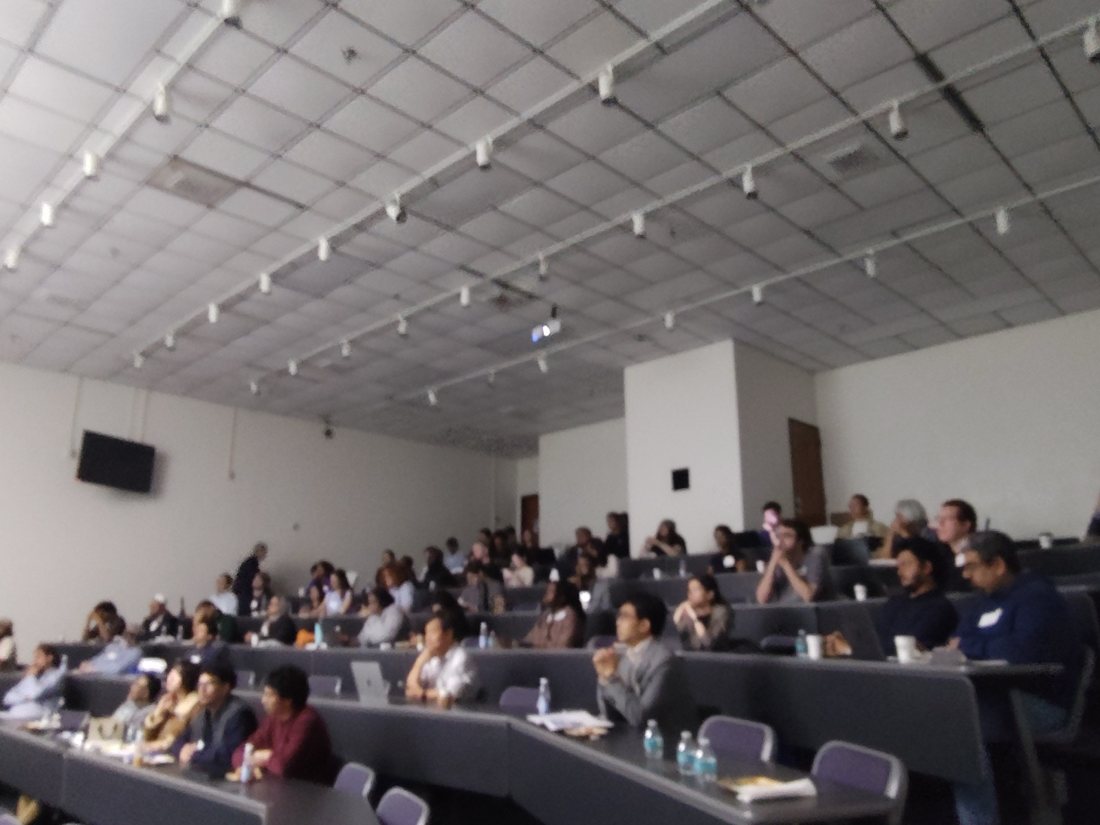
The one-day hybrid workshop paired morning lectures by leading scientists with afternoon hands-on training in computational methods. About 100 participants took part, representing more than 20 universities, laboratories, and companies across seven states and three countries.
Three Research Thrusts
TN-QuMat research and training are organized around three thrusts, each of which was represented in the workshop program.
- Thrust 1: Many-body theory of disordered correlated quantum materials. How disorder and strong correlations shape phenomena such as the Mott metal-insulator transition and spin and charge order in high-temperature superconductors, studied with quantum embedding methods and DCA++ on ORNL’s leadership-class supercomputers.
- Thrust 2: Ab initio study of topologically nontrivial quantum materials. First-principles studies of topological Anderson insulators and quantum spin liquids, using density functional theory and Wannier function-based modeling to connect theory with experiment.
- Thrust 3: Synthesis and characterization of low-dimensional quantum systems. Growth and analysis of thin-film topological materials and their heterostructures, including how substrates, stoichiometry, and controlled disorder affect their optical and electronic properties.
Invited Speakers and Talks
Hanna Terletska (MTSU), Dean Lin Li (TSU), and Quincy Quick, Chief Research Officer and Associate Vice President for Research at TSU, opened the meeting with a welcome and an overview of the TN-QuMat program.

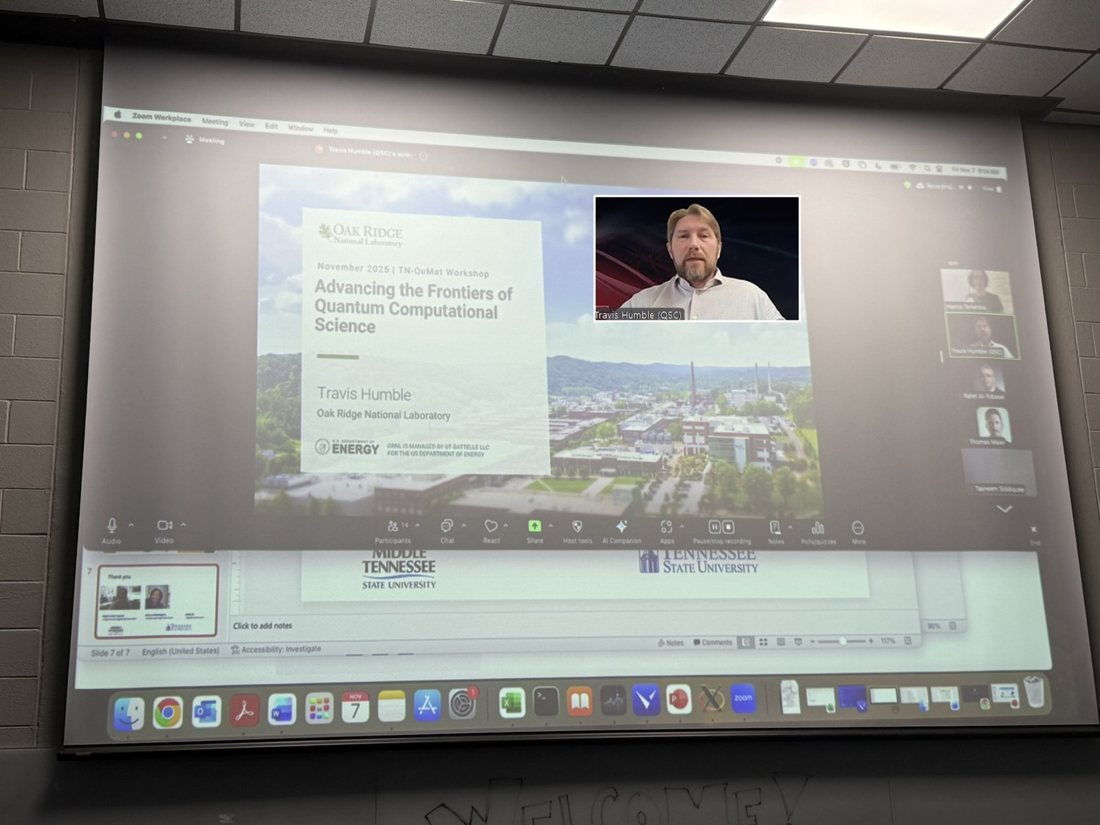
Travis Humble • Director, Quantum Science Center, ORNL
Plenary: Advancing the Frontiers of Quantum Computational Science
Humble opened the scientific program with an overview of ORNL’s role in quantum science, including the Quantum Science Center, one of the Department of Energy’s National Quantum Information Science Research Centers. He reviewed recent breakthroughs in quantum computing, the range of hardware now being pursued (transmons, photonics, Majoranas, trapped ions, neutral atoms, and silicon dots), the challenges and opportunities ahead, and Tennessee’s role in the national quantum effort.
Thomas Maier • Oak Ridge National Laboratory
Talk: Advanced Modeling of Quantum Materials
Strongly correlated materials exhibit remarkable quantum phenomena, including unconventional superconductivity, magnetism, and charge order, but strong electron-electron interactions make them difficult to describe with conventional perturbative approaches. Maier showed how advanced numerical methods provide fundamental insight into these systems. Using the two-dimensional Hubbard model as a minimal framework, he highlighted the dynamical cluster approximation and the ORNL-developed DCA++ code, which enable large-scale, nonperturbative quantum Monte Carlo simulations that capture spatial correlations beyond mean-field theory. He discussed how these methods address longstanding questions in high-temperature superconductivity, including the interplay of fluctuating spin and charge stripes with superconducting correlations and the disappearance of superconductivity in overdoped cuprates through weakened spin-fluctuation pairing and impurity scattering.
Hendrik Heinz • University of Colorado Boulder
Talk: Using Machine Learning to Navigate the Materials Design Space
Heinz presented the NSF DMREF partnership among the University of Colorado Boulder, Duke University, and MTSU on AI for materials discovery and characterization, focusing on machine learning for hybrid metal-halide perovskites. These materials are promising for solar cells and light-emitting diodes, but their structures remain difficult to predict from the starting materials, and discovery often relies on slow trial and error. Machine learning, combined with structure databases, molecular dynamics simulation, and synthesis in an iterative feedback loop, offers a way to navigate this vast design space and to screen compositions before they are made.
Jack Villanova • Middle Tennessee State University
Talk: A First Look at First Principles: Introduction to Density Functional Theory
Villanova introduced density functional theory (DFT) as a tool for studying quantum materials, from the Hohenberg-Kohn theorems and Kohn-Sham equations to the treatment of exchange and correlation and the limits of the method. He illustrated how DFT guides research on topological insulators, Weyl semimetals, and quantum spin liquids, and highlighted collaborations with ORNL, where Wannier function calculations predicted a split signal in neutron scattering form factors before costly experiments.
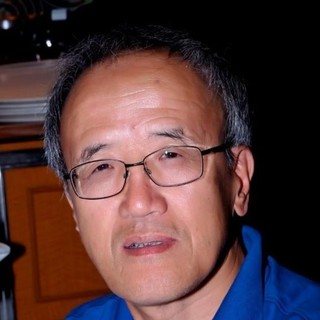
Richard Mu • TIGER Institute, Tennessee State University
Talk: Synthesis and Characterization: Making Materials in the Lab
Mu presented the experimental facilities of TSU’s TIGER Institute and its structure- and function-by-design research platform, which builds on nanowires, nanofibers, thin films, quantum dots, and 2D materials. Examples included ZnO nanowires with silver nanoparticles, with applications in nanolasers, optical sensing, and surface-enhanced Raman scattering. He also outlined the research infrastructure being established at TSU to support materials synthesis and characterization.
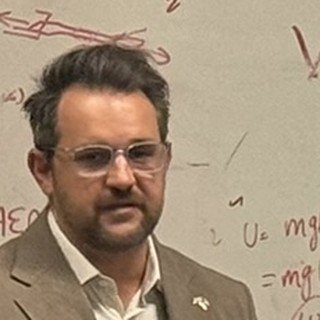
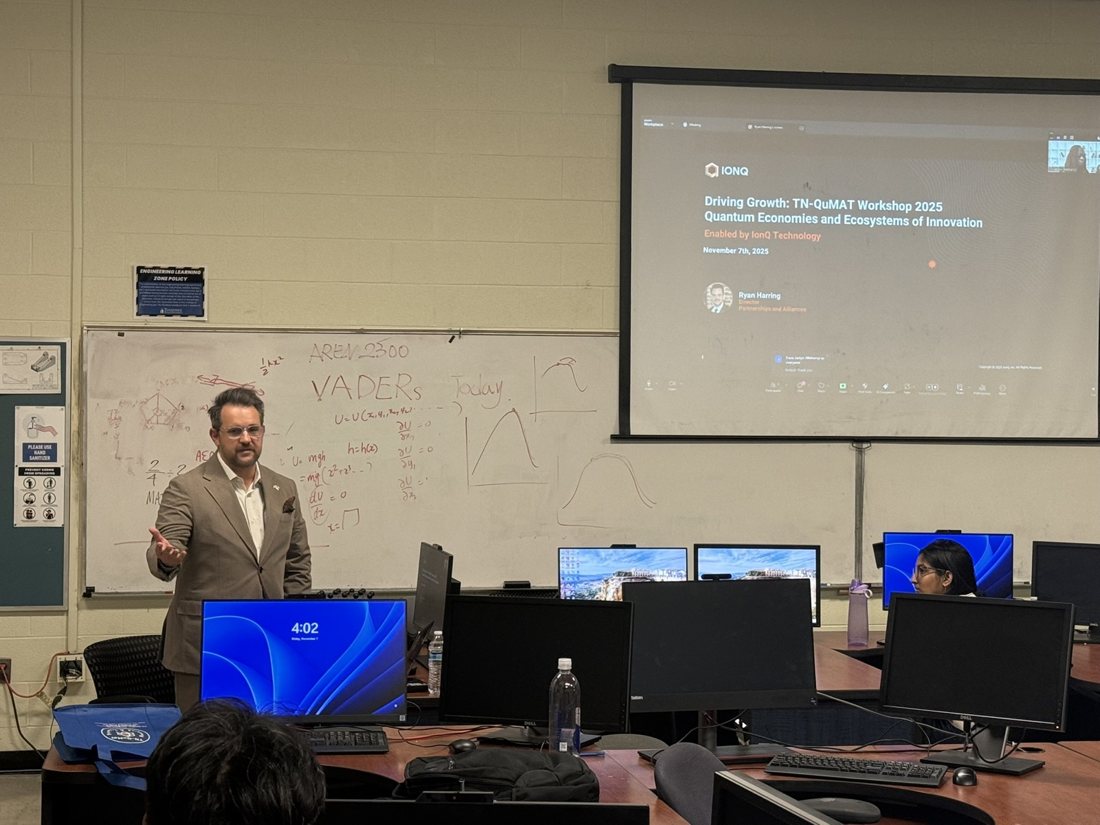
Ryan Harring • Director, Partnerships and Alliances, IonQ
Talk: Driving Growth: Quantum Economies and Ecosystems of Innovation Enabled by IonQ Technology
Speaking during the afternoon quantum computing session, Harring offered an industry perspective on quantum economies and innovation ecosystems, and on workforce opportunities in the quantum sector.
Daniel Nino • Xanadu
Hands-on: Computational Quantum Chemistry with PennyLane
The Xanadu session took participants from a first entangled circuit to the variational quantum eigensolver for a small molecule.

Fei Lin • Virginia Tech
Hands-on: ALPS Software Package: Introduction and Hands-on Example
Lin, a member of the ALPS collaboration, introduced the package and its capabilities, from exact diagonalization and quantum Monte Carlo to DMRG and dynamical mean-field theory.
Hands-on Training: From Model Hamiltonians to Quantum Algorithms
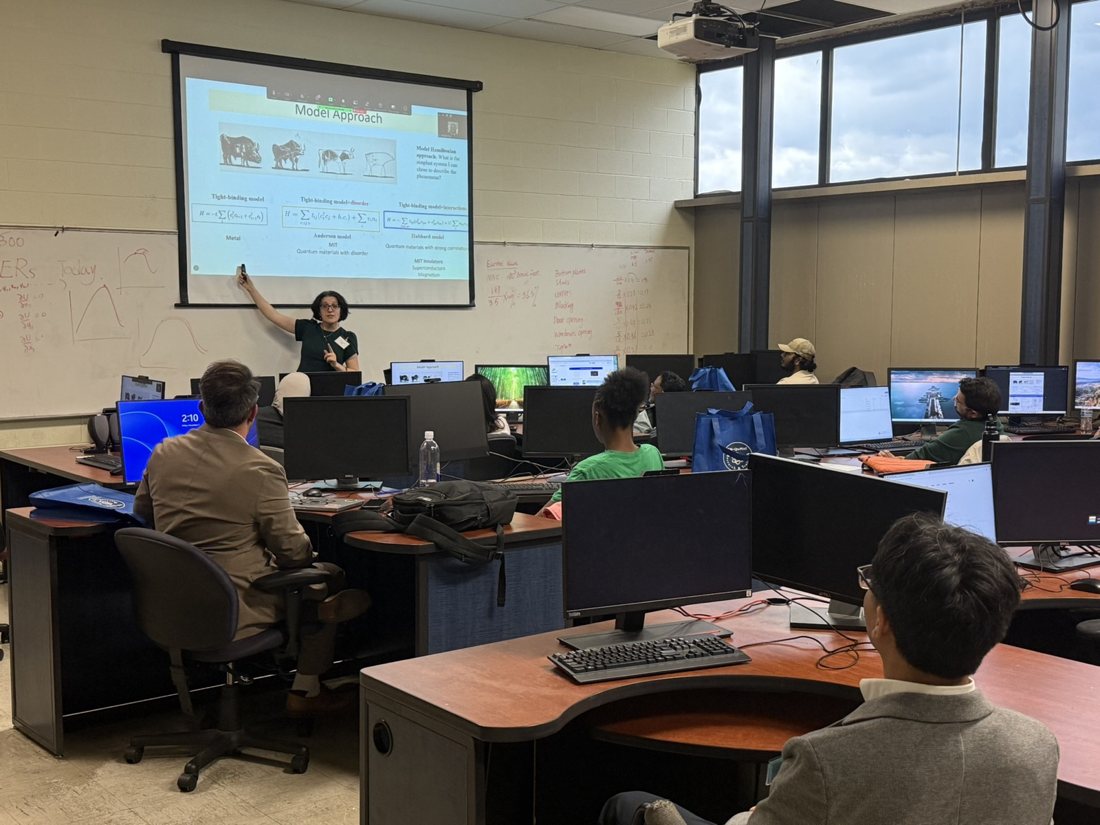
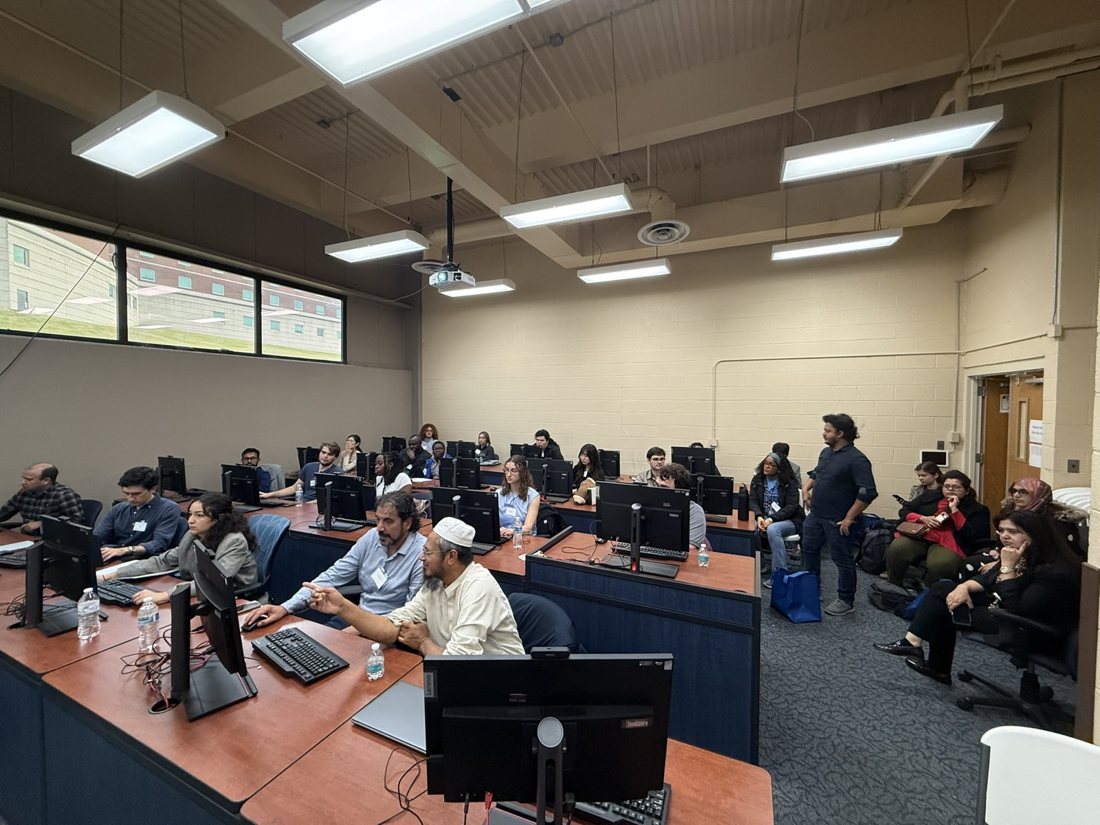
The afternoon translated the morning’s lectures into practice. Eighty registrants signed up for two rounds of parallel sessions in TSU’s computer laboratories, with Zoom access for remote participants. About 40 percent of registrants reported no prior familiarity with elementary Unix commands, and the sessions took participants from first steps to research-level calculations with the tools used in the field.
- Many-body methods (ALPS, DCA++). Led by Hanna Terletska, Anirudha Mirmira (MTSU), and Fei Lin (Virginia Tech). Participants built Hamiltonians step by step in Python, from the one-dimensional tight-binding chain to the Su-Schrieffer-Heeger model and the Anderson model of random disorder. They computed energy levels, obtained the density of states from the Green function, and connected these results to the disorder-driven metal-insulator transition. Lin then introduced ALPS through dynamical mean-field theory of the Hubbard model on a Bethe lattice, where the spin-resolved Green functions distinguish the high-temperature paramagnetic state from the low-temperature antiferromagnetic state.
- Density functional theory. Led by Jack Villanova (MTSU). Using Quantum ESPRESSO and VESTA on a TN-QuMat virtual machine, participants studied the stacking of α-RuCl3, a Kitaev quantum spin liquid candidate. They visualized crystal structures, ran total-energy calculations for different stacking shifts, and pooled their results to identify the favored stacking. They then compared their findings with fully relaxed DFT+U calculations including spin-orbit coupling and van der Waals corrections, in which the rhombohedral stacking has the lowest energy, followed by C2/m. A further exercise treated the O atom, the O+ ion, and the O2 molecule.
- Quantum computing. Led by Daniel Nino of Xanadu and Ryan Harring of IonQ. Working in PennyLane, Xanadu’s open-source software library, participants first built an entangled Bell-state circuit. They then ran the variational quantum eigensolver for the linear H3+ molecule, using PySCF to prepare Hartree-Fock, CISD, and CCSD initial states and comparing how each affects convergence to the ground-state energy.
- AI for materials. Mariia Karabin and Wasim Mondal (MTSU) led a detailed hands-on training that followed directly from Heinz’s talk. After surveying the materials properties that machine learning can predict, participants focused on the formation energy, a measure of compound stability, using a calculated dataset of about 420 Heusler alloys in the L21 and XA structures.
The day closed with a tour of experimental facilities at TSU’s TIGER Institute, led by Richard Mu, linking the computational training to materials synthesis and characterization in the laboratory.
Reach Across Tennessee and Beyond
About 100 participants took part in the workshop, reflecting strong demand for quantum training across institutions and disciplines. Registrants included 32 undergraduate students, 30 graduate students, 4 postdoctoral researchers, and 28 faculty members, from fields including physics, computer and data science, chemistry, mathematics, and engineering.
Forty-one registrants (40 percent) came from the partner HBCUs, TSU, Fisk, and Meharry, and 29 from MTSU. Participants also came from across the country and abroad, including the University of Tennessee, Knoxville, Vanderbilt University, the University of Colorado Boulder, Virginia Tech, Hawassa University in Ethiopia, and JNCASR in India, together with the quantum companies IonQ and Xanadu. More than 20 institutions were represented in all. This response underscores the need for accessible quantum training for undergraduate and graduate students across fields, well beyond physics.
Photos
Acknowledgment
TN-QuMat Workshop 2025 was supported by the U.S. Department of Energy RENEW program under award DE-SC0025748.