Careers in Quantum: From Grad School to National Labs to Industry
Sep 18, 2026
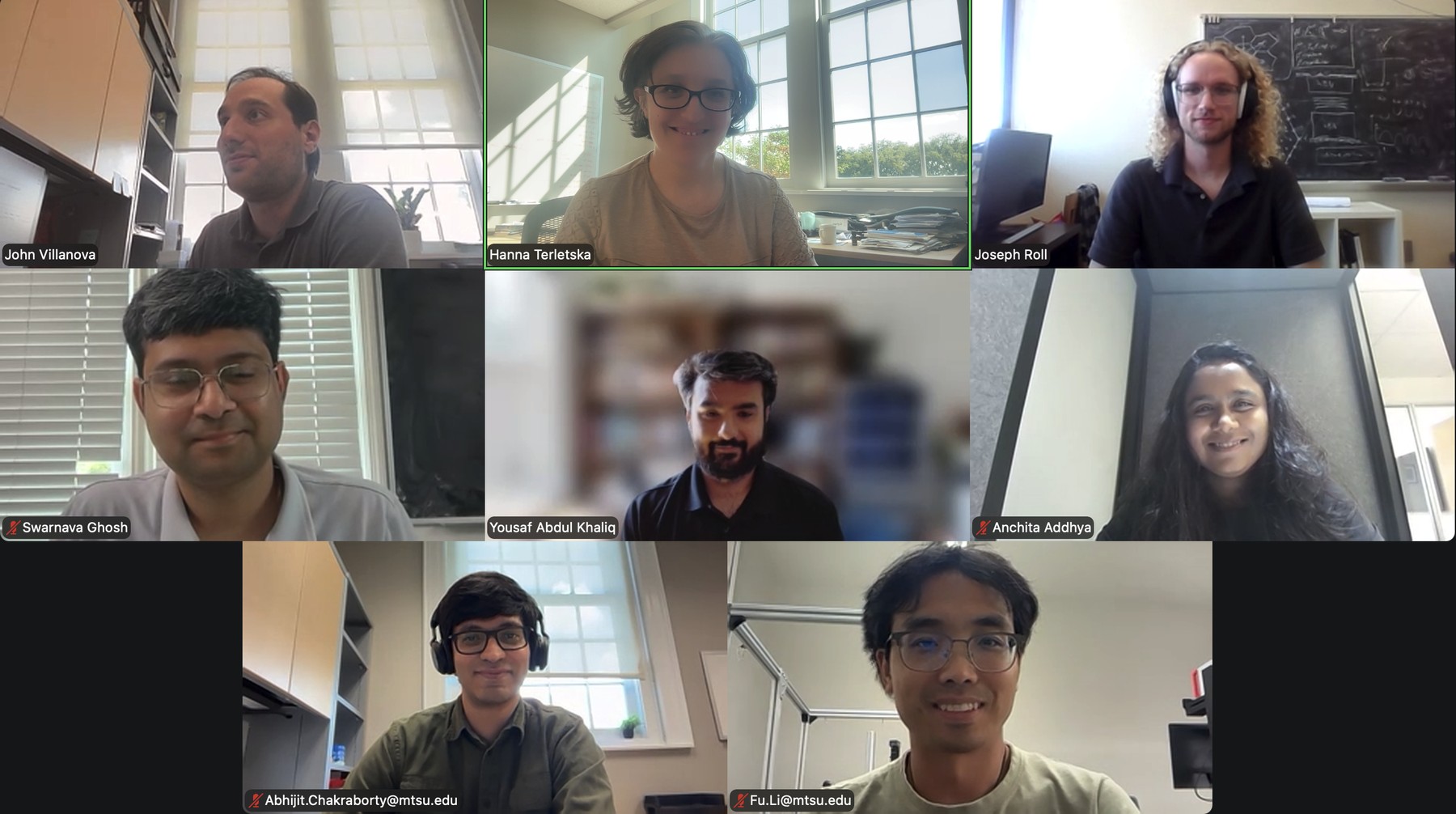
Panelists and organizers at the end of the career panel. Top: John Villanova, Hanna Terletska, Joseph Roll. Middle: Swarnava Ghosh, Yousaf Khaliq, Anchita Addhya. Bottom: Abhijit Chakraborty, Fu Li.
On September 18, 2026, the MTSU QRISE Center hosted a virtual career panel for all TN-QuMat AMPLIFY scholars and for students at MTSU and its partner institutions, Tennessee State University (TSU), Fisk University, and Meharry Medical College. The panel drew 50 attendees, who heard four very different answers to the same question: how do you actually build a career in quantum? The discussion covered careers in national laboratories, academia, graduate school, and industry.
John Villanova of MTSU organized and led the panel with support from Hanna Terletska and Abhijit Chakraborty, drawing out the practical details that students rarely get to ask about. Students in physics, engineering, computer science, mathematics, data science, and other STEM fields were encouraged to attend.
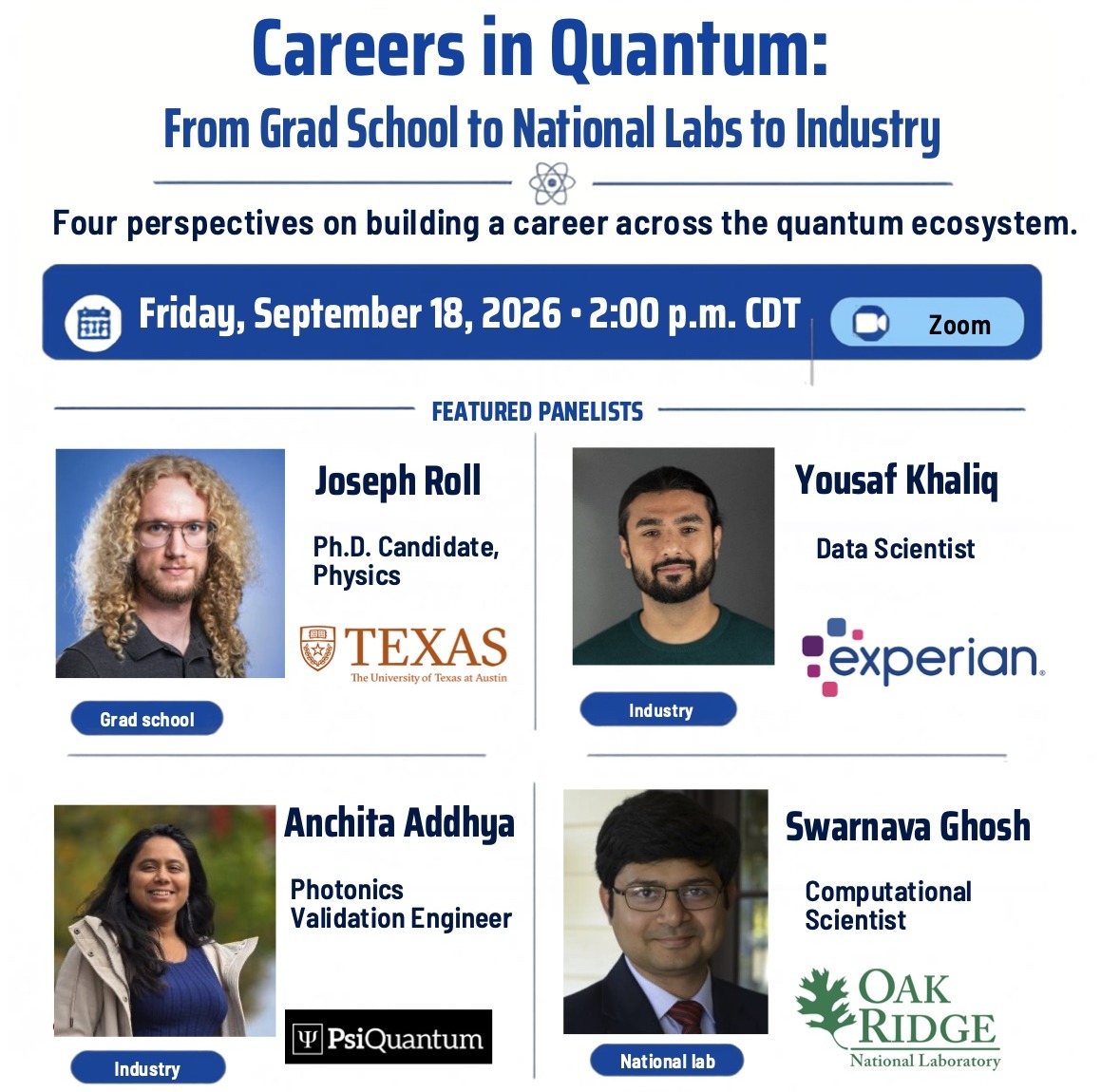
Four Career Paths
- Joseph Roll, graduate school. Ph.D. candidate in physics at the University of Texas at Austin and NSF Graduate Research Fellow.
- Anchita Addhya, quantum industry. Photonics validation engineer at PsiQuantum, working on the photonic technology behind utility-scale quantum computers.
- Swarnava Ghosh, national laboratory. Computational scientist at Oak Ridge National Laboratory.
- Yousaf Khaliq, applied industry. Data scientist at Experian, where he leads the quantum research effort, and an MTSU Ph.D. alumnus.
What the Panel Covered
The discussion was built around questions students often have but rarely get to ask directly: Is a Ph.D. necessary? How are physics Ph.D. programs funded? What does a typical week look like in graduate school, at a national laboratory, or at a quantum hardware company? How do students get into the national laboratory system through internships such as DOE SULI? Which skills should they start building now?
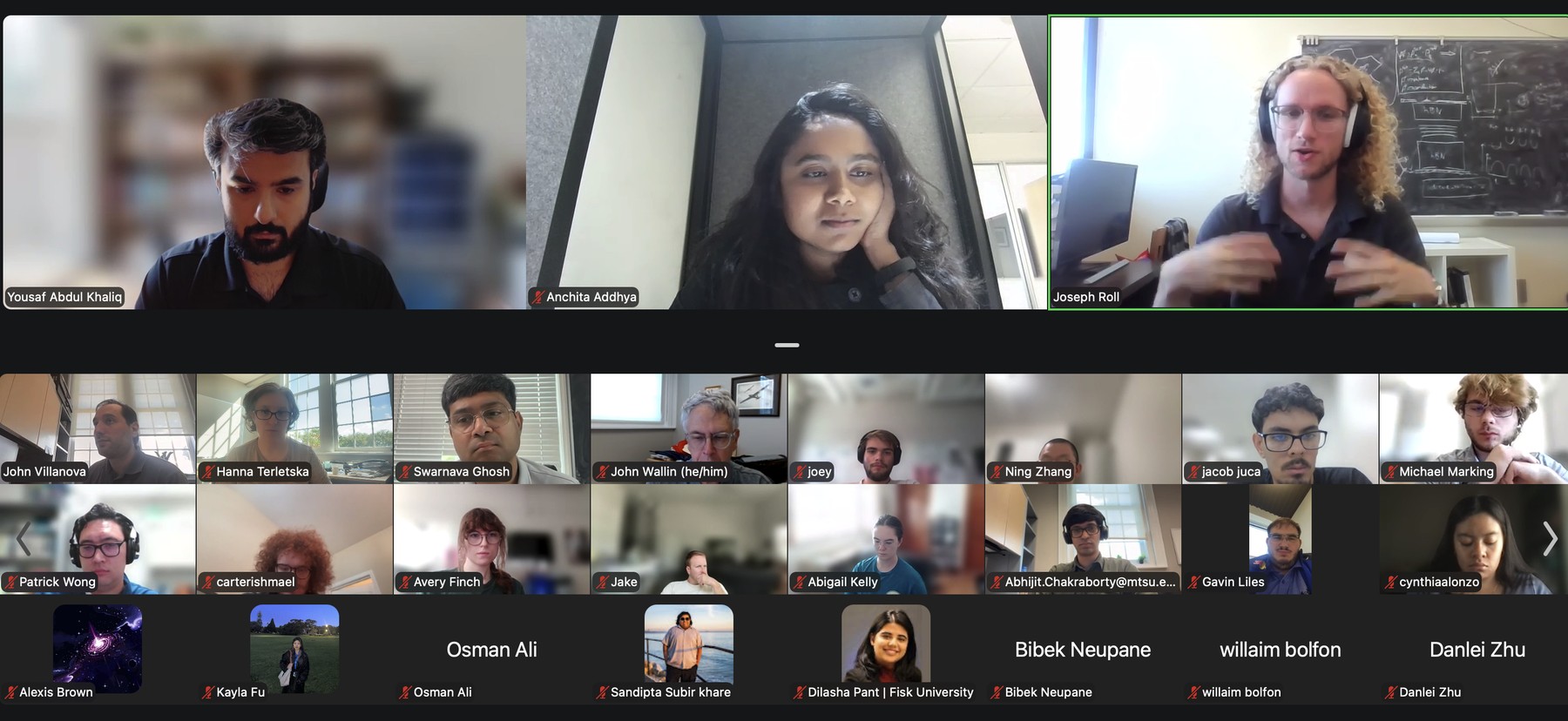
Panelists answering student questions, with attendees below.
What Came Through Across All Four Paths
- Few careers were planned. Most paths came together through a research opportunity or a conversation that happened at the right moment.
- Research experience sets students apart. REUs, SULI internships, projects, and real relationships with faculty were the biggest differentiators.
- Communication is critical. Every panelist named it independently. Technical skills get you the interview, but writing, presenting, and working across disciplines are what keep you in the room.
- Programming is essential, whatever the job title says.
- Quantum brings both excitement and hype. Students should learn to tell them apart.
These are the skills TN-QuMat builds through its interinstitutional AMPLIFY program: research experience, technical fluency, and communication skills that carry across every one of these career paths.
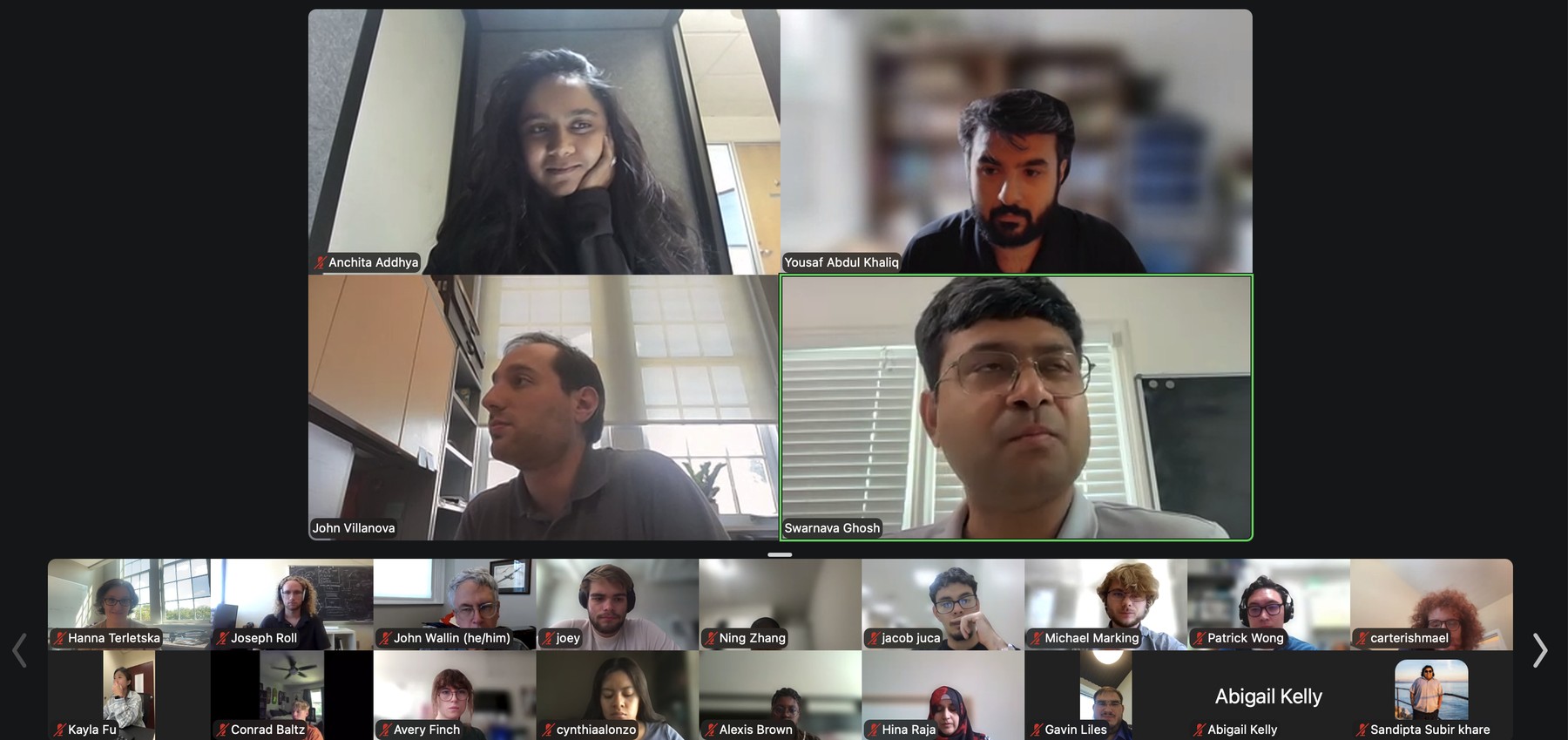
Anchita Addhya, Yousaf Khaliq, John Villanova, and Swarnava Ghosh during the discussion.
Acknowledgment
This event was hosted by the MTSU QRISE Center as part of TN-QuMat, supported by the U.S. Department of Energy RENEW program under award DE-SC0025748. For more about TN-QuMat, visit https://tn-qumat.org.